Skip to content
homesdesignai
Design ideas

Exterior House Colors That Work With Your Roof and Stone

Choosing exterior paint colors is harder than choosing interior ones: the swatch is tiny, the house is large, and daylight changes everything. These 12 color schemes cover the classic combinations of body, trim and accent, and explain how your roof, brick, stone and architecture should steer the final choice.

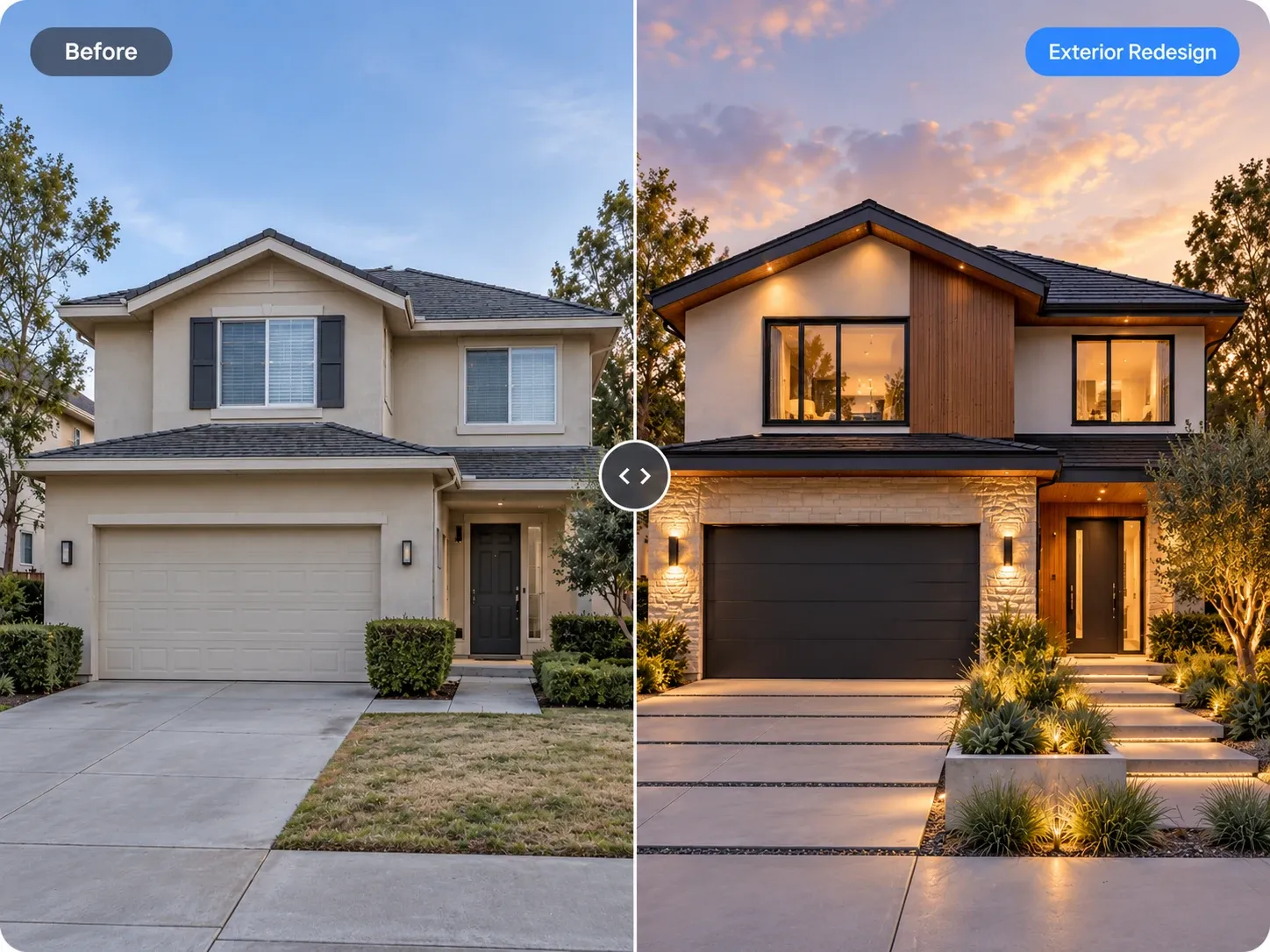
Before and after: suburban stucco house redesigned with wood accents, stone base, black garage door and lit landscaping
  1. 1. Think in three parts: body, trim, accent

    Every exterior scheme has a body color for the siding, a trim color for window casings, fascia and corner boards, and an accent for the front door and maybe the shutters. A useful balance is about 60 percent body, 30 percent trim and 10 percent accent. Choosing in that order, body first, keeps the scheme from being built around a door color you might change in five years.

    Try this idea
  2. White house with black shutters

    2. Crisp white with black trim

    White siding with black windows, gutters and shutters is the most graphic combination you can paint. Pick a white with a slight warm undertone, since stark blue-whites glare in full sun and can look gray in shade. Use satin black for trim and doors so it holds color without highlighting dents. It suits farmhouse, colonial and modern houses equally well.

    Try this idea in Modern Farmhouse style
  3. 3. Greige body with soft white trim

    Greige, a gray with beige undertones, is the safest neutral for houses with mixed materials, because it sits comfortably next to brown roofs, gray stone and tan brick. Pair a mid-tone greige body with a soft white trim and a deeper charcoal or espresso front door. It looks updated without dating as quickly as cool gray.

    Try this idea in Contemporary style
  4. 4. Navy blue with white trim

    A deep navy body with bright white trim gives a house weight and a classic, tailored look, especially on shingle, cape and colonial homes. Navy reads lighter outdoors than on the chip, so choose one slightly deeper than you think. A natural wood or brass-hardware front door adds warmth against the blue.

    Try this idea in Coastal style
  5. 5. Sage or muted green

    Gray-green and sage blend into surrounding trees and lawns, making the house feel settled into its site. Pair a mid-tone sage with cream trim and a warm wood door, or go darker with an olive body and black windows for a more modern take. Green works especially well with brown or weathered wood shingle roofs.

    Try this idea
  6. Two-story house with a covered porch

    6. Warm whites and creams for traditional homes

    On Victorian, craftsman and colonial houses, a cream or ivory body looks softer and more period-appropriate than bright white. Pull a taupe or soft brown for trim details and a deep red, green or black for the door. Creams also pair well with red brick chimneys and foundations, where a stark white would look harsh.

    Try this idea
  7. 7. Charcoal or black body with wood

    Dark charcoal or soft black siding makes a house look modern and helps it recede into a wooded lot. Add warmth with cedar soffits, a wood door or wood slat details. Dark colors absorb more heat, so check that vinyl siding is rated for dark paint, and expect a little more visible fading on south- and west-facing walls over time.

    Try this idea
  8. 8. Let the roof decide the temperature

    The roof is the most expensive surface to change, so let it set the color temperature. Brown, tan or terracotta roofs call for warm bodies: cream, greige, warm white, sage or olive. Black, charcoal or gray roofs open up cooler options: crisp white, blue-gray, navy and true gray. Fighting the roof undertone is the most common reason a new color looks wrong.

    Try this idea
  9. Brick house with a well-kept front lawn

    9. Pull colors from brick and stone

    Fixed materials like brick, stone and pavers already contain several colors. Pick your trim from the mortar color and the body from the lightest or darkest fleck in the stone, so painted and natural surfaces relate. With red brick, warm whites, deep greens and creams work; avoid cool grays, which can make red brick look orange.

    Try this idea
  10. Tudor-style home with a landscaped yard

    10. Colors that respect the architecture

    Some styles come with a built-in palette. Tudor houses look right with cream or tan stucco and dark brown half-timbering; Spanish revival homes suit warm white or sand stucco with terracotta roofs; mid-century ranches handle muted teal, mustard or olive accents. Starting from the period palette avoids a scheme that fights the house's lines.

    Try this idea
  11. Brightly painted house on a city street

    11. Saturated color on a row house or bungalow

    On narrow city lots and small bungalows, a confident body color like ochre, terracotta, sky blue or deep teal gives the house personality without overpowering the street. Keep trim simple in white or cream so the main color reads clearly. Check what neighbors are painted first; you want a house that stands out within the block, not one that clashes with it.

    Try this idea
  12. 12. A front door as the accent

    If you prefer a neutral house, put the color on the door. Deep red, forest green, teal, ochre and navy all work against white, greige or gray bodies. Use a high-gloss or semi-gloss finish so it looks rich and wipes clean. A painted door is also the cheapest way to test whether you like a bolder color before committing it to the whole house.

    Try this idea

Upload your room and test these ideas

Your photos stay private to your account.

Planning guide

How to choose and test exterior paint colors

List what will not change: roof, brick, stone, windows and any vinyl or metal parts. Choose colors that work with those first, then narrow to two or three body options. Exterior colors look lighter and brighter outdoors than on a small chip, so most people end up picking a shade or two deeper than their first choice.

Paint large samples, at least 2 x 2 feet, on boards and check them on two sides of the house in morning sun, afternoon sun and on an overcast day. Hold them next to the trim and the roof. If you live in an HOA or historic district, confirm the approved palette and the approval process before buying paint; many associations require a submittal with color names and photos.

Preview exterior paint colors on your house with AI

Photograph the house straight-on from the street on a bright overcast day, with the whole facade, roof and trim in frame. Overcast light shows colors most accurately; direct sun washes out siding and deep shadows hide trim. Avoid trees or cars blocking large parts of the front.

Upload the photo to the AI exterior design tool and describe the scheme by role: "keep the roof, brick and windows, paint the siding warm greige, trim soft white, front door deep green." Because the result keeps your house's shape and fixed materials, you can see right away whether the body color works with your roof and stone.

Generate two or three schemes side by side, such as navy, sage and greige, then take the favorite to the paint store to match physical samples. The AI preview narrows the list; the painted sample on your siding confirms the exact shade.

Frequently asked questions

How many colors should a house exterior have?

Most houses look best with three: a body color, a trim color and an accent for the door. Ornate Victorian homes can carry four or five, while modern houses often use two. Counting roof, brick or stone as part of the palette helps prevent too many competing colors.

What trim color goes with a gray house?

Soft white is the classic choice for a gray house, giving clean contrast without glare. For a more modern look, black or charcoal trim works on light gray bodies. Match the undertone: warm grays pair with creamy whites, cool grays with crisper whites.

Do dark exterior colors fade faster?

Dark and saturated colors tend to show fading sooner than light neutrals, especially on walls with strong afternoon sun, and they absorb more heat. High-quality exterior paint with good UV resistance helps. If you have vinyl siding, use only colors and paints rated as safe for vinyl to avoid warping.

Can I preview paint colors on my own house?

Yes. Upload a photo of your house to the AI exterior design tool and ask for a specific body, trim and door color. It returns realistic images of your home in that scheme while keeping the roof and structure. Always confirm the final shade with a painted sample on your siding.

See these ideas in your own space

Open AI Exterior Design, upload a photo and compare variations side by side.

More design ideas

All ideas

Styles that work well here

All styles