Skip to content
homesdesignai
Design ideas

Front Yard Landscaping Ideas That Boost Curb Appeal

The front yard frames your house, and small changes there are visible to everyone who passes. These 12 front yard landscaping ideas cover foundation beds, layered planting, walkways, lighting and low-water options, with spacing and sizes that keep the result looking good as plants grow in.

House with manicured shrubs and red flowersExample
  1. Brick house with a well-kept front lawn

    1. Make foundation beds deeper

    The thin 2-foot strip of shrubs along many foundations makes a house look perched. Widen beds to 5 to 8 feet deep so you can layer plants and soften the base. Plant shrubs at least half their mature width away from the wall, plus a foot for airflow, so they never rub the siding or block maintenance access.

    Try this idea
  2. 2. Layer plants by height

    Arrange beds in three tiers: evergreen shrubs 3 to 5 feet tall at the back, perennials and grasses 18 to 36 inches in the middle, and low groundcovers or edging plants at the front. Plant in groups of three, five or seven and repeat the same plants along the bed. Repetition is what makes a planting look designed rather than collected.

    Try this idea in Coastal style
  3. 3. A walkway wide enough for two

    Make the main path to the door 4 to 5 feet wide so two people can walk side by side. Large concrete pavers, bluestone slabs, brick or poured concrete with saw-cut joints all work; match the material to the house. A gentle curve feels welcoming on a deep lot, while a straight path suits a formal or modern facade.

    Try this idea in Modern style
  4. 4. Crisp bed edges

    Clean edges between lawn and planting beds make even a simple yard look maintained. Use steel or aluminum edging for a thin modern line, a brick soldier course for a traditional house, or a hand-cut spade edge refreshed each spring. Top beds with 2 to 3 inches of shredded bark or fine gravel to suppress weeds.

    Try this idea
  5. 5. An evergreen backbone

    Choose a few evergreen shrubs that hold structure in winter, then fill in with perennials. Select dwarf or compact varieties sized for the space so you are not shearing them every month. Group plants with similar water needs and run drip irrigation under the mulch so watering is automatic and targeted at the roots.

    Try this idea
  6. Spanish-style house with desert landscaping

    6. Drought-tolerant planting with gravel

    In dry climates, replace thirsty lawn with decomposed granite or gravel mulch and plants adapted to your region, such as agave, lavender, salvia, yucca, native grasses and sedum. Cluster plants in generous groups with boulders for scale. A dry streambed of river rock can carry roof runoff across the yard while doubling as a design feature.

    Try this idea
  7. Green lawn with trees

    7. Shrink the lawn to a clean shape

    A smaller lawn with a defined shape, such as a rectangle or a simple oval, looks more intentional than grass that fills every leftover space. It also cuts mowing and watering. Replace the rest with planting beds or a low groundcover like creeping thyme or clover in areas without foot traffic.

    Try this idea
  8. 8. A tree that frames the house

    Place a single specimen tree off to one side of the house so it frames the facade instead of hiding it. Plant medium trees at least 15 to 20 feet from the foundation and away from sewer lines. In the US, call 811 before you dig so underground utilities are marked for free.

    Try this idea
  9. 9. Lighting that guides and highlights

    Use warm 2700K low-voltage lights. Uplight one or two trees, wash the facade softly, and place path lights 6 to 8 feet apart on alternating sides of the walk to avoid a runway effect. Step lights on stairs improve safety. A photocell or timer makes sure lights come on at dusk without anyone thinking about it.

    Try this idea
  10. 10. Mailbox and house numbers that read from the street

    House numbers should be at least 4 inches tall, in a color that contrasts with the wall, and lit at night so emergency services can find you. For curbside mailboxes, USPS guidance puts the bottom of the box 41 to 45 inches above the road and 6 to 8 inches back from the curb. A small planting bed around the post finishes it.

    Try this idea in Modern Farmhouse style
  11. Modern grey house with a green lawn and trees

    11. A clean, modern front yard

    For a modern house, use a limited palette of three to five plant types in long blocks, large-format concrete pavers set in gravel, and a horizontal slat fence or screen. Ornamental grasses add movement, and a single multi-stem tree adds height. Keep containers and ornaments to a minimum so the architecture stays the focus.

    Try this idea in Minimalist style
  12. Green plants in terracotta pots

    12. Planters that flank the front door

    A matched pair of planters on either side of the entry instantly signals the front door. Scale them up: containers at least 24 inches tall or wide hold enough soil to keep plants healthy and look proportional next to a full-height door. Use evergreens for structure and add seasonal annuals around the base.

    Try this idea

Upload your room and test these ideas

Your photos stay private to your account.

Planning guide

Planning your front yard project

Look at the yard from the street and decide what the house needs most: a clearer path to the door, more depth at the foundation, privacy or simply less maintenance. Hardscape such as walkways, edging and lighting is the most disruptive part to change later, so install it first and plant afterward.

Check local rules before you start. Some HOAs require approval for tree removal, lawn replacement or new fencing, and many towns restrict fence heights in front yards. In drought-prone areas, local water utilities sometimes run turf replacement programs. Choose plants hardy in your USDA zone, and phase the planting over a couple of seasons if the budget is limited.

Try front yard ideas on your own photo with AI

Stand on the sidewalk or across the street and photograph the house and front yard straight-on, in overcast daylight. Include the whole yard from the curb to the facade so the AI can see where beds, paths and lawn meet. Leave out cars and trash bins if you can.

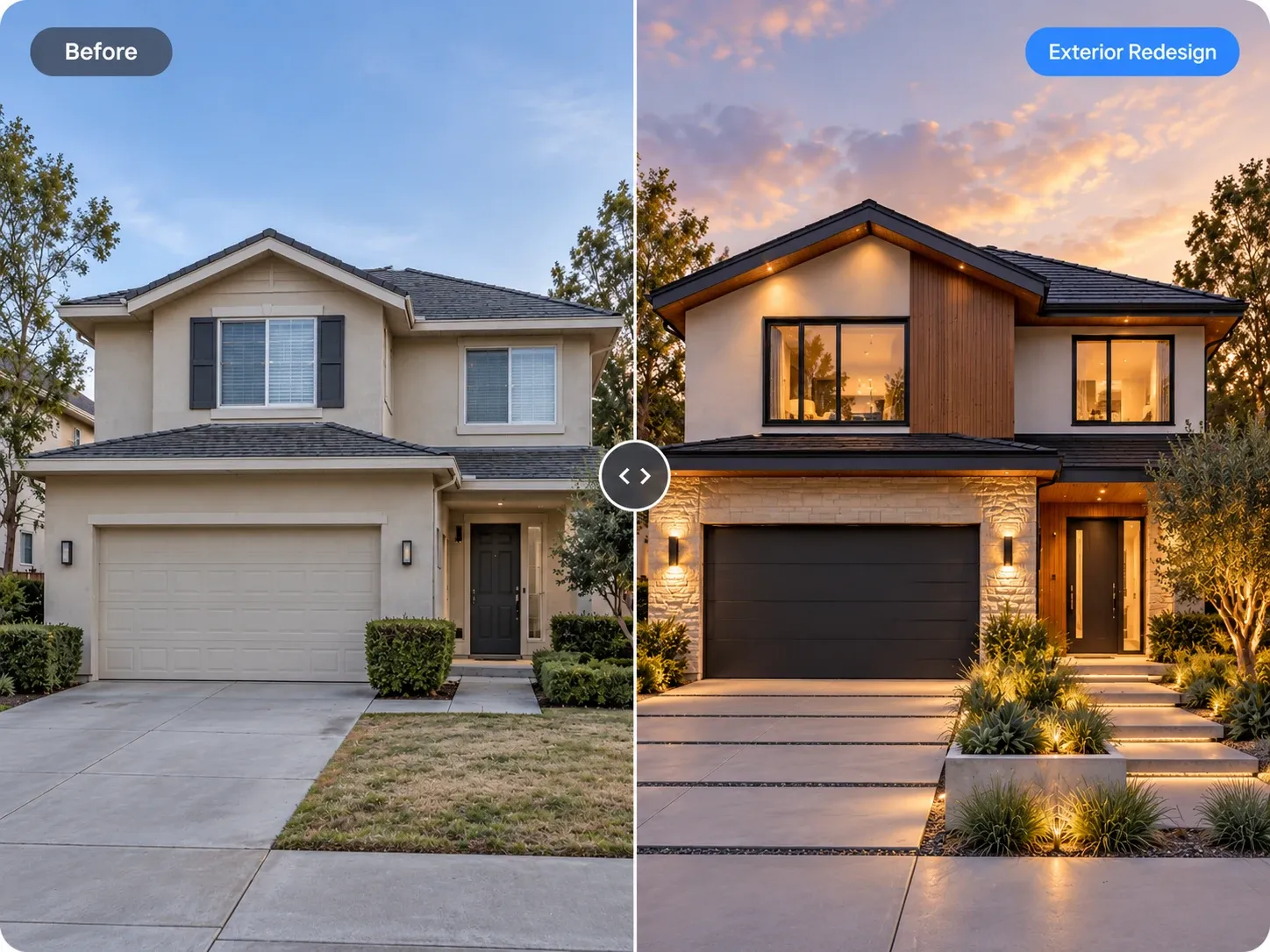
Upload the photo to the AI garden design tool and give specific instructions: "keep the house and driveway, widen the foundation bed to 6 feet with layered grasses and boxwood, add a bluestone walkway to the door, warm path lighting." The redesign keeps your house and the view from the street, so the planting is judged against your real facade.

Try two or three directions, such as a lush layered garden, a drought-tolerant gravel garden and a clean modern scheme. Seeing them on your own yard helps you decide what fits your climate and maintenance time before you buy a single plant.

Frequently asked questions

What is the cheapest way to improve curb appeal in the front yard?

Edge and mulch the beds, prune overgrown shrubs, add a pair of planters by the door and update the house numbers and porch light. These steps cost little but make a house look maintained. Painting the front door is another low-cost change that is visible from the street.

What are good low-maintenance front yard plants?

Compact evergreen shrubs, ornamental grasses and tough perennials suited to your region need little care once established. Native plants are often the most forgiving because they are adapted to local rainfall and soil. Group them in drifts, mulch well and add drip irrigation to cut maintenance further.

How far from the house should you plant shrubs?

Plant shrubs at least half their mature width away from the wall, plus about a foot for airflow and maintenance access. A shrub that grows 4 feet wide should be planted about 3 feet from the foundation. Trees need much more room, often 15 feet or more.

Can AI design my front yard from a photo?

Yes. Upload a straight-on photo of your house and yard to the AI garden design tool, and it returns realistic landscaping ideas on your own property, with new beds, paths and plants. Use it to choose a direction; a local nursery or landscaper can confirm plant choices for your climate.

See these ideas in your own space

Open AI Garden Design, upload a photo and compare variations side by side.

More design ideas

All ideas

Styles that work well here

All styles