Skip to content
homesdesignai
Design style

Minimalist Interior Design: Calm Rooms With Fewer Things

Minimalist interior design keeps only what is useful or meaningful and gives it room to breathe. Expect hidden storage, a quiet palette and a few well-made pieces. Here is how to do it without a cold result, and how to test it on your own room.

Minimal living room with a low sofa and clean linesMinimalist example

Key elements of Minimalist design

  1. 01

    Fewer, better pieces

    A minimalist living room might hold just a sofa, one chair, a coffee table and a lamp. Each piece is well made and scaled to the room, so the space feels complete rather than empty. Quality and proportion replace quantity.

  2. 02

    Hidden, built-in storage

    Floor-to-ceiling cabinets with push-to-open doors, a storage bed and a closed media wall keep belongings out of sight. Finish storage to match the walls so it disappears, leaving surfaces bare except for one or two objects.

  3. 03

    Negative space by design

    Empty wall and floor areas are deliberate. Leave at least one wall per room without art or shelving, and keep 30 to 36 inches of clear walkway around furniture. The open space is what makes the few pieces feel intentional.

  4. 04

    Tonal, monochrome palette

    Colors stay within one family, typically whites, stones and soft grays with a single dark accent. Variation comes from shifts in tone and sheen, such as matte walls against satin cabinetry, rather than from contrasting hues.

  5. 05

    Diffused, even light

    Minimalist rooms avoid the visual noise of many fixtures. Use recessed or cove lighting, linen roller shades that filter daylight, and one simple lamp at 2700K for evenings. Hide bulbs wherever possible so you see the light, not the fixture.

Minimalist colors, materials and mistakes to avoid

Color palette

  • Chalk White #F7F6F2
  • Pale Stone #DCD7CE
  • Bleached Ash #D8C3A0
  • Warm Gray #9C968C
  • Soft Black #2B2A28

Materials

  • Matte plaster and limewash
  • Pale ash and maple
  • Honed limestone
  • Undyed linen
  • Matte lacquer
  • Felted wool

Avoid

  • Removing all texture, which makes the room feel clinical.
  • Buying storage boxes instead of actually editing belongings.
  • Choosing undersized furniture that floats awkwardly in the room.
  • Leaving windows bare when glare or privacy is a problem.
  • Displaying many small objects instead of one larger piece.

Minimalist style in every room

See Minimalist in your own space

Upload a photo and the style is preselected for you.

Your photos stay private to your account.

Minimalist interior design guide

The roots and philosophy of minimalism

Minimalism in interiors draws on several sources. Traditional Japanese architecture, with its tatami rooms, sliding screens and sparse furnishing, showed how emptiness can feel rich. Early modernists stripped ornament from buildings, and the minimalist art movement of 1960s New York, with artists such as Donald Judd and Agnes Martin, focused on simple forms, repetition and material. Architects later applied the same reduction to homes.

The philosophy is less about owning nothing and more about choosing deliberately. Every object should be useful, beautiful or both, and it should have a dedicated place to live. The result is a room that is easy to clean, easy to rest in and easy to change. Minimalism overlaps with Japandi and Scandinavian design, but it is stricter about decoration and color.
Making minimalism work room by room

Begin with an edit, not a shopping list. Go room by room and remove everything that is broken, duplicated or unused in the past year. Only then decide what storage you need. In living rooms, a closed low cabinet along one wall can hold media gear, books and games, freeing the coffee table and shelves. A large rug under all front furniture legs unifies the few pieces you keep.

Bedrooms should hold a bed, two side tables or wall-mounted ledges, and storage that closes. Kitchens benefit most from clear counters: store small appliances in a pantry or appliance garage and leave only the kettle or coffee maker out. On a budget, paint mismatched cabinets and furniture the same matte color as the walls, which visually removes them and calms the room instantly.

  • Clear every horizontal surface except for one object
  • Use matching hangers, bins and containers
  • Replace open shelving with doors where possible
  • Choose one material for side tables and repeat it
  • Keep window treatments simple and close to the wall color

Using AI to test a minimalist redesign

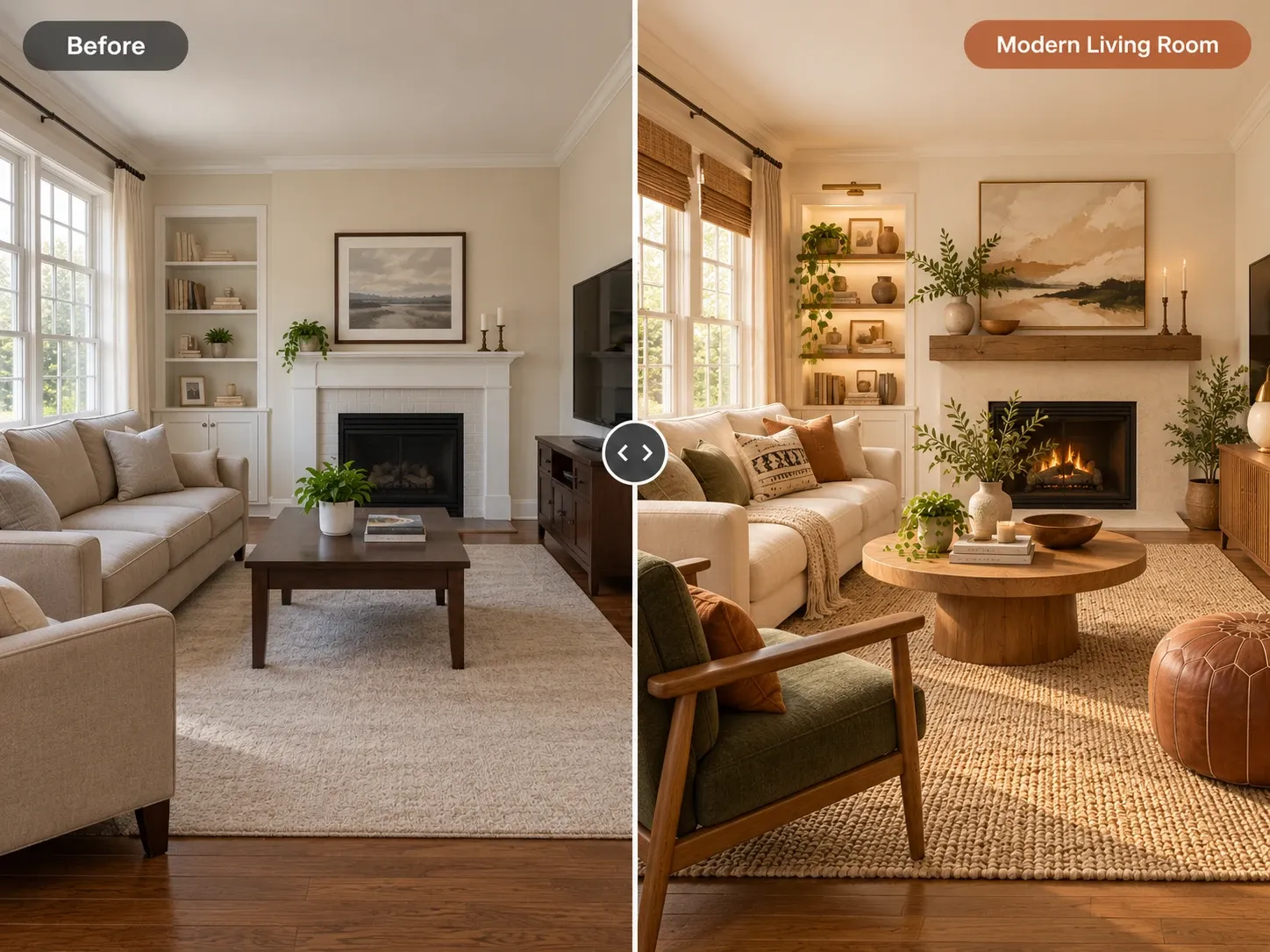
Minimalism is a style where AI previews are especially useful, because it is hard to imagine your own room without its clutter. Photograph the room as it is, mess included. The generator keeps the walls, windows and camera angle, then shows a pared-back version furnished in the minimalist style, which makes it much easier to decide what to keep and what to let go.

Add specific instructions for the pieces you plan to keep, for example 'keep the grey sofa and the oak dining table, replace the shelving with closed white cabinets.' If the result feels stark, ask for a wool rug, linen curtains or warmer wood. Compare a minimalist version with a Japandi one; many people discover they want minimal clutter but more warmth.

Frequently asked questions

What is minimalist interior design?

Minimalist interior design reduces a room to essential, well-made pieces, a restrained palette and plenty of open space. Storage is closed and often built in, surfaces stay clear, and interest comes from material, light and proportion rather than decoration.

How do I make a minimalist room feel warm instead of cold?

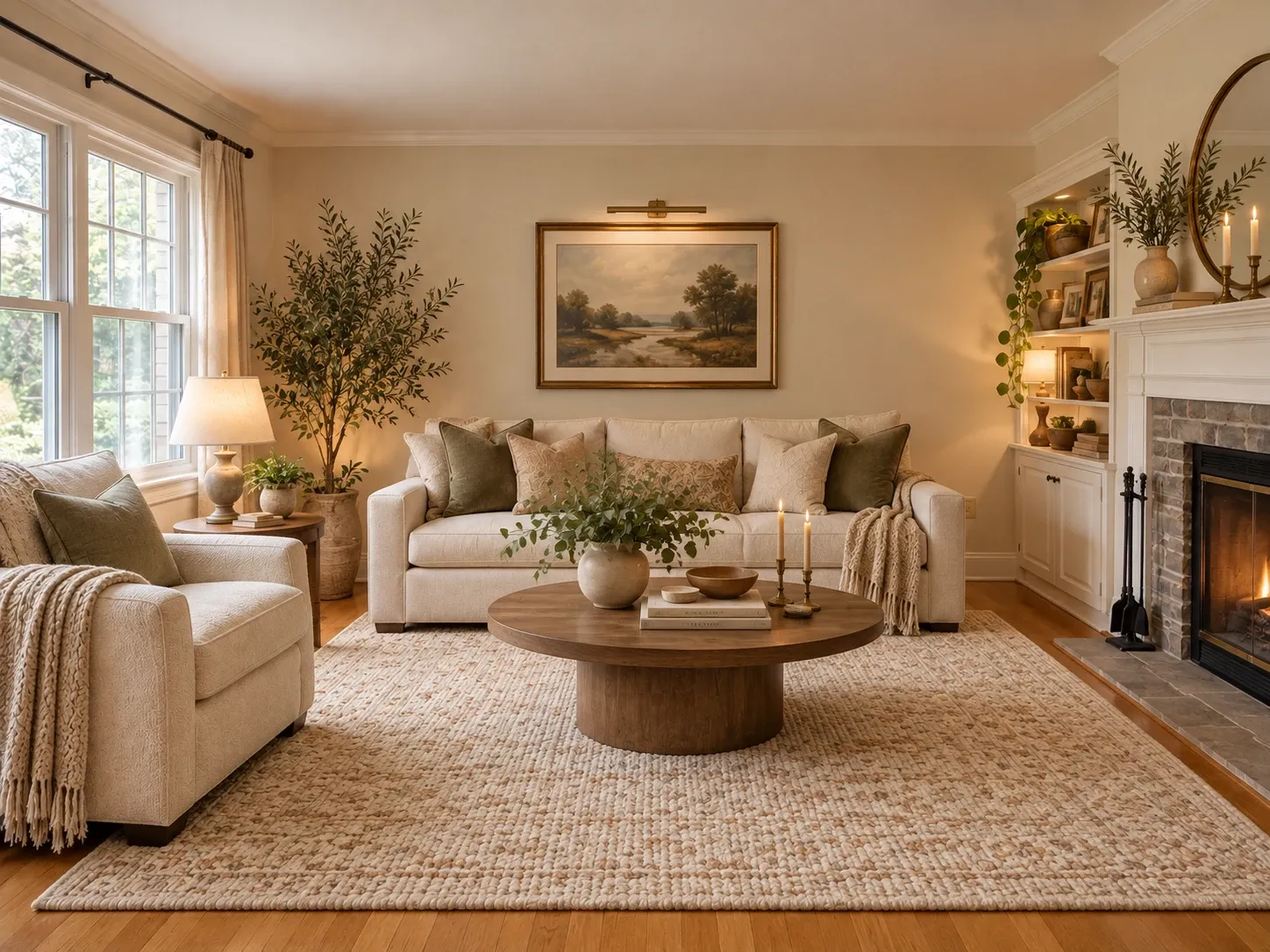
Add warmth through texture and light, not more objects. Use a wool or jute rug, linen curtains, a light wood such as oak or ash, and warm 2700K bulbs. A single plant or ceramic vase also softens the room without breaking the minimalist rules.

What is the difference between minimalist and Japandi design?

Minimalist design focuses on reduction and can be quite stark, while Japandi blends that restraint with Scandinavian warmth and Japanese craft. Japandi uses more wood, earthier accents, handmade ceramics and natural fibers, whereas pure minimalism allows fewer objects and a tighter, often lighter palette.

Is minimalist decor good for small spaces?

Minimalism suits small homes very well. Fewer pieces, closed storage and a tonal palette make a room feel larger because the eye has fewer places to stop. Choose furniture on legs, wall-mounted lighting and a mirror placed opposite a window to stretch the space further.

Can AI show my cluttered room as a minimalist space?

That is one of its most useful applications. Upload the photo as it is, choose the minimalist style, and the generator returns photorealistic redesigns with your walls, windows and perspective intact but the clutter edited out. It helps you visualize decluttering before you start, and new users can start free.

Redesign your room in Minimalist style

Keep your walls and windows. Change everything else in seconds.

Best tools for this style

Similar styles

View all styles

Ideas in this style

More ideas