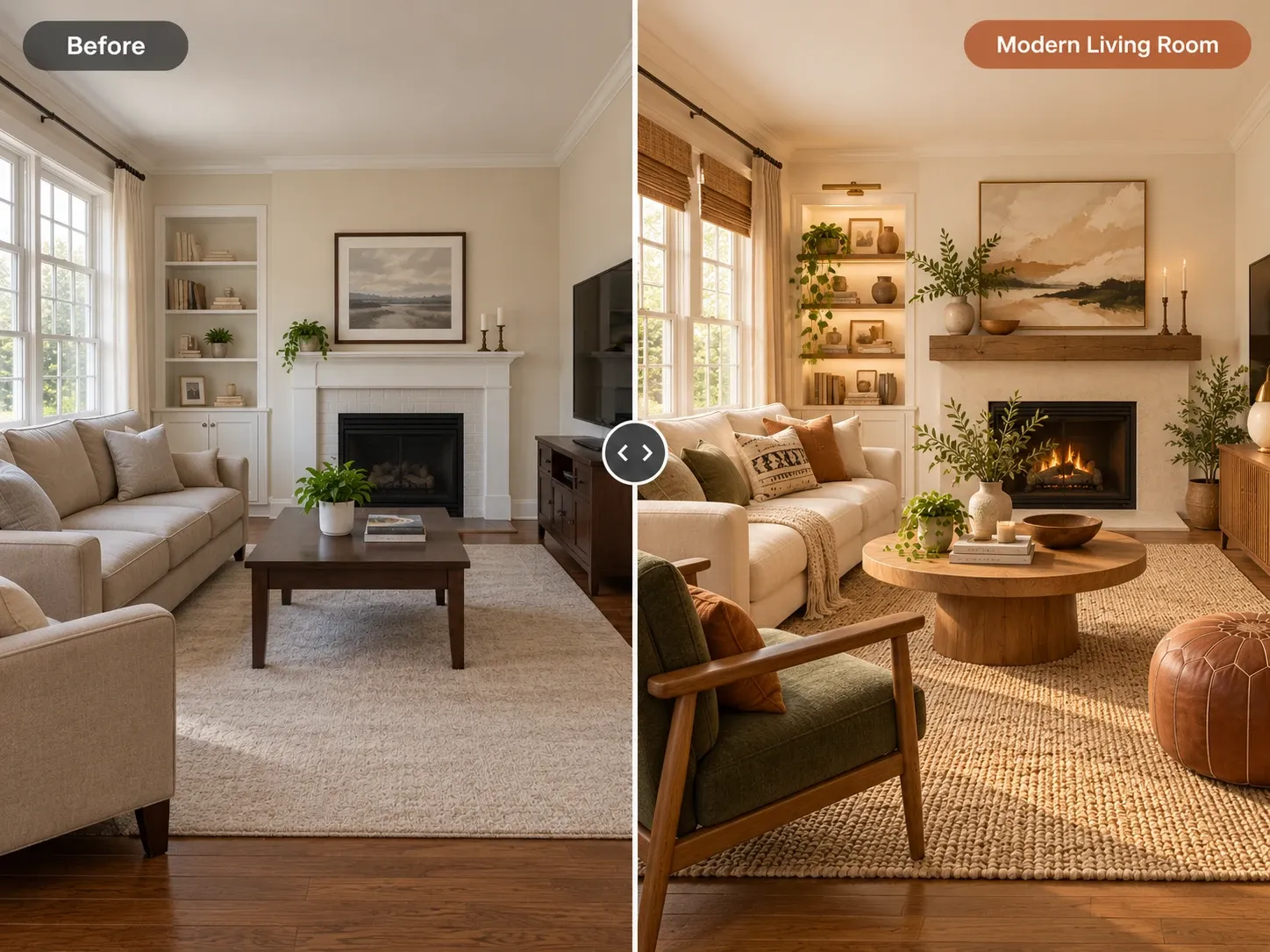
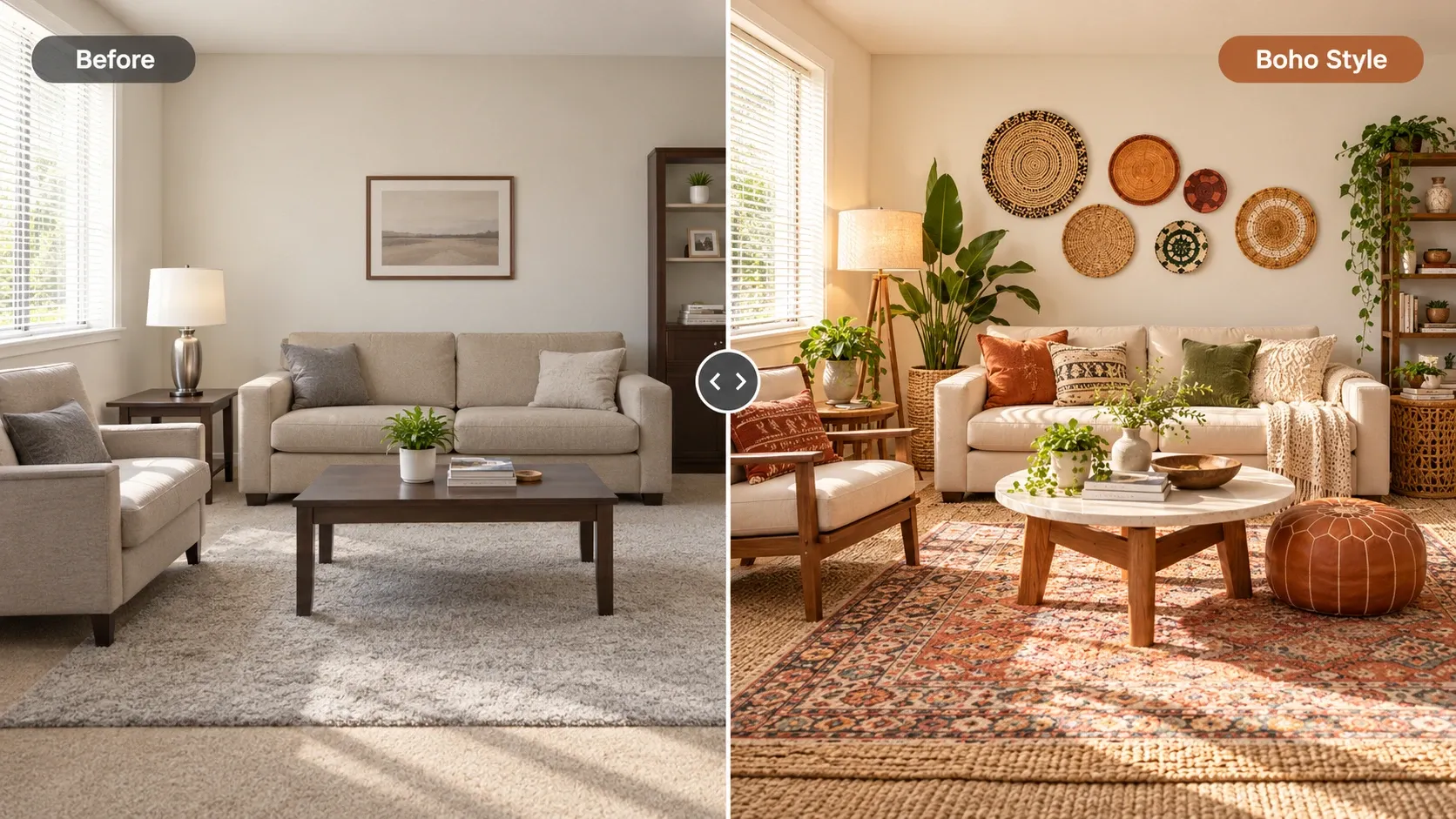
AI Interior Design Prompts: Examples for Every Goal
7 min read
Good AI interior design prompts are short, specific and tell the AI what to keep as well as what to change. Below you will find a simple formula and dozens of examples grouped by goal, from full style changes to small tweaks in lighting and materials. Copy them, swap in your details and test them on your own room photo.
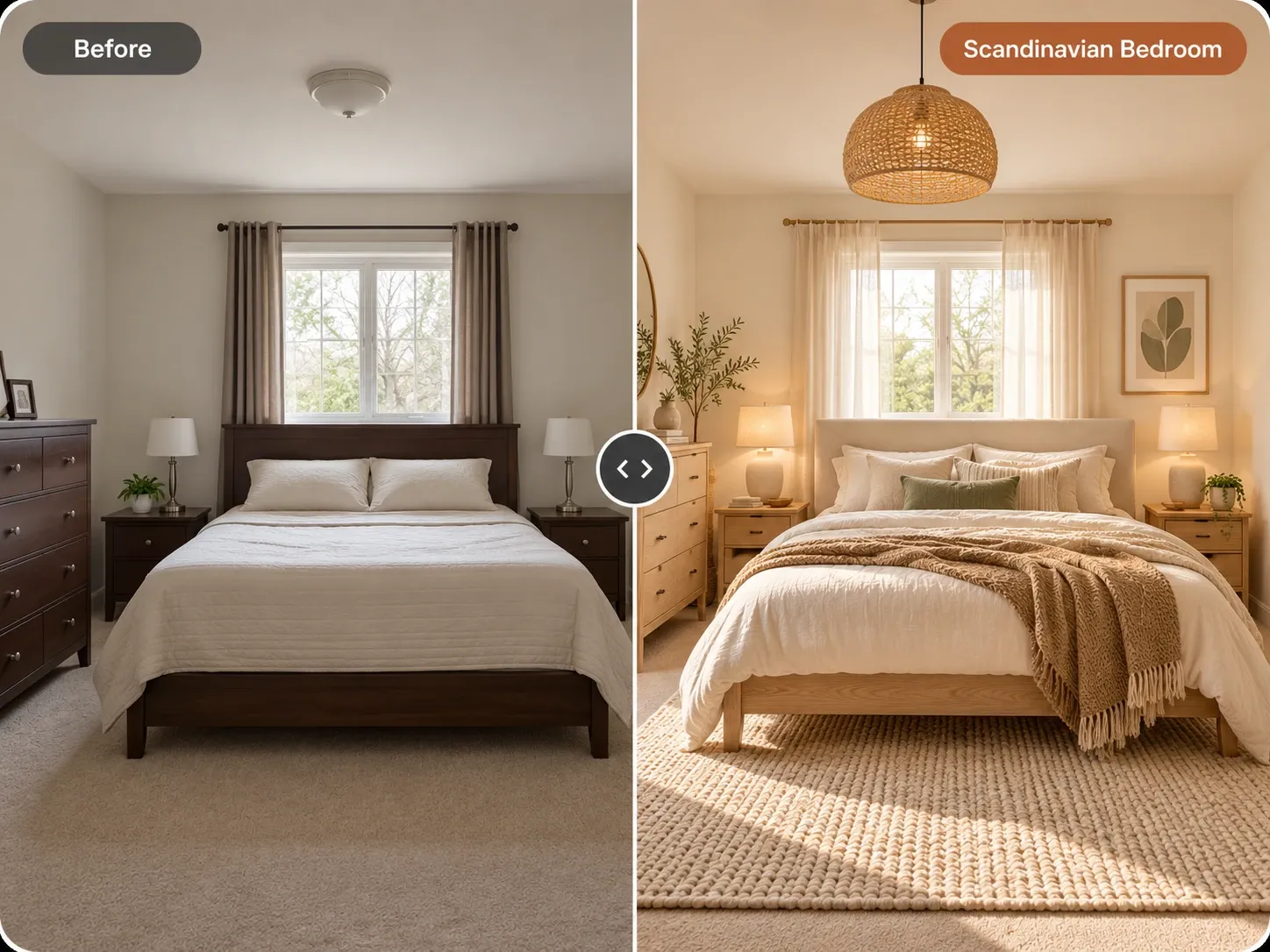
How AI Interior Design Prompts Work
When you redesign a room from a photo, the image already supplies the walls, windows and layout. Your prompt fills in the rest: the style, what stays, what changes and the mood. A good prompt reads like a short brief to a designer. Concrete nouns such as oak, linen, brass and terrazzo give the AI far more to work with than adjectives like nice or modern.
In a tool for AI room design like Homes Design AI, you choose a room type and style first, then add instructions in plain language. An AI design assistant turns what you write, in any language, into a precise prompt. Clear requests still get better results, so use this simple formula:
- Room: what the space is and how it is used
- Keep: the furniture, floors or features that must stay
- Change: the specific items, colors or finishes to replace
- Mood and light: the feeling and the time of day
- Materials: two or three named finishes
How to ask AI to decorate a room in one sentence
Combine the formula into one or two sentences: living room, keep the gray sofa and wood floor, change the walls to warm white, add a wool rug and a brass floor lamp, soft evening light. That is enough. Long paragraphs with competing ideas tend to produce muddled results, so save extra wishes for a second round of edits.
Interior Design Prompt Examples for a Style Change
Style prompts work best when you name the style plus two or three signature details. That anchors the result and avoids generic interpretations. For Japandi interior design, mention low furniture, pale wood and paper lighting. For mid-century modern interior design, mention walnut, tapered legs and a mustard or teal accent.
If you are not sure which style suits you, run the same photo through three style prompts and compare. Seeing your own room in each style makes the choice far easier than looking at other people's homes, because the light, layout and proportions are already yours. Note which details you like in each version before choosing.
- Redesign this living room in Japandi style with a low oak sofa, linen cushions, a paper pendant lamp and neutral walls
- Mid-century modern bedroom with a walnut bed frame, tapered legs, a mustard throw and a globe pendant
- Modern farmhouse kitchen with white shaker cabinets, black hardware and a wood island top
- Coastal living room with a white slipcovered sofa, light blue accents, a jute rug and sheer curtains
- Industrial loft look with black metal shelving, a cognac leather sofa and Edison bulb pendants
Prompts That Keep Your Furniture
Most people do not want to replace everything. The fix is to name the pieces that stay at the start of the prompt, with color and material, so the AI can recognize them. Then describe the changes around them. This gives you a design you can build with what you already own.
If a kept item still changes, describe it more precisely, such as the dark green velvet three-seat sofa, or use an area edit to change only the zone around it. Tools that can edit a specific area, like Homes Design AI, are ideal here because the rest of the image stays put.
- Keep the brown leather sofa and the oak floor, update everything else in a warm modern style
- Keep the bed and nightstands, change the bedding to white linen and add a large abstract print above the bed
- Keep the dining table, replace the chairs with black spindle chairs and add a linear pendant
- Keep the kitchen cabinets, change only the backsplash to white zellige tile
- Keep all furniture and only restyle the shelves, cushions and plants
Color Prompt Examples
Color prompts need two things: the color and where it goes. Paint brand names can help, but descriptive names often work just as well: warm white, greige, sage, terracotta, deep navy. Say whether the color applies to all walls, one accent wall, the cabinets or the trim. Add a finish like matte or satin if it matters.
A familiar rule of thumb is 60-30-10: about 60 percent main color, 30 percent secondary color and 10 percent accent. You can write that split into the prompt directly. Always confirm with physical paint samples, because screens and AI images rarely match real paint exactly. Look at the samples in morning and evening light.
- Paint all walls and the ceiling a warm white for a seamless look
- Paint only the wall behind the bed deep navy and keep the other walls white
- Sage green lower cabinets with brass handles and white upper cabinets
- Terracotta, cream and olive palette, with terracotta as the accent in cushions and a vase
- Change the room to a greige and soft black scheme with matte finishes
Lighting Prompt Examples
Lighting changes the mood of an image more than almost anything else. Specify the time of day and the light sources: warm evening light from table lamps feels very different from bright midday sun. Layered lighting, meaning ambient, task and accent light, also makes the design more realistic to recreate.
Mention color temperature if you know it. Warm white bulbs around 2700K suit living rooms and bedrooms, while slightly cooler light is common in kitchens and offices. If a result looks flat, ask for one more light source rather than simply asking for a brighter room. Lamps at different heights add depth.
- Soft evening light with two table lamps and a floor lamp in the reading corner
- Bright natural daylight from the window with sheer white curtains
- LED strip lighting under the upper cabinets and three pendants over the island
- Warm, cozy light with candles on the coffee table and a dimmed paper pendant
- Picture lights above the artwork and a wall sconce on each side of the bed
Material and Texture Prompt Examples
Materials make an AI image look expensive or cheap. Name them precisely: white oak instead of wood, honed marble instead of stone, boucle instead of fabric. Limit yourself to about three main materials so the result feels coherent. Mixing too many finishes in one prompt often creates a busy room.
Think about how materials age and clean, not just how they look. A white boucle sofa is lovely in an image but hard to keep clean with pets. Prompt the realistic version, such as a performance fabric in oatmeal, so the design you fall for is one you can live with.
- Replace the floor with wide plank white oak in a matte finish
- Honed white marble countertop with brushed brass fixtures
- Boucle accent chair, linen curtains and a chunky wool rug
- Rattan pendant, cane chairs and a terracotta tile floor for a warm boho feel
- Microcement walls and floor in warm gray for a spa bathroom
Prompts for Small Spaces and Fixing Weak Results
Small rooms need prompts that protect floor space. Ask for leggy furniture, wall-mounted storage, mirrors and a light palette. Mention scale directly, such as a loveseat instead of a sofa. For inspiration, browse these small living room ideas, then test the ones you like on your photo with AI room design.
When a result misses, change one thing per attempt. Make the request shorter, move the most important instruction to the front and remove conflicting styles. If the AI keeps adding clutter, ask for fewer decor items. For the full process from photo to shopping list, read how to use AI to decorate a room.
- Small bedroom with a floating nightstand, wall-mounted reading lights and under-bed storage
- Studio apartment with a loveseat, a round dining table for two and a bookshelf as a room divider
- Make this small bathroom feel larger with a frameless glass shower, large light tiles and a wall-hung vanity
- Minimal decor, clear surfaces and only three accessories in the room
Written by the Homes Design AI team. Next step: try AI Room Design on a photo of your own space.