Backyard Landscaping on a Budget: Get More From Every Dollar
5 min read
Backyard landscaping on a budget works best when you plan before you buy. Most overspending happens when plants, pavers and furniture are bought one impulse at a time. This guide shows how to set priorities, phase the work, choose low-cost materials and plants, and preview the finished look so every dollar goes toward a yard you will actually use.
Start With a Plan, Not a Shopping Cart
Walk the yard at different times of day and take notes. Where does the sun land in the afternoon? Where does water collect after rain? Which neighbor windows look straight in? Then decide how you want to use the space: dining, kids' play, a vegetable bed, a quiet corner to read. A yard that serves two or three clear purposes almost always looks better than one that tries to do everything.
Next, sketch the yard on paper and mark rough zones. Measure the main areas with a tape so you can estimate how much gravel, mulch or edging you need. Pick one focal point, such as a tree, a fire pit or a bench against a painted fence. Everything else should support it instead of competing with it.
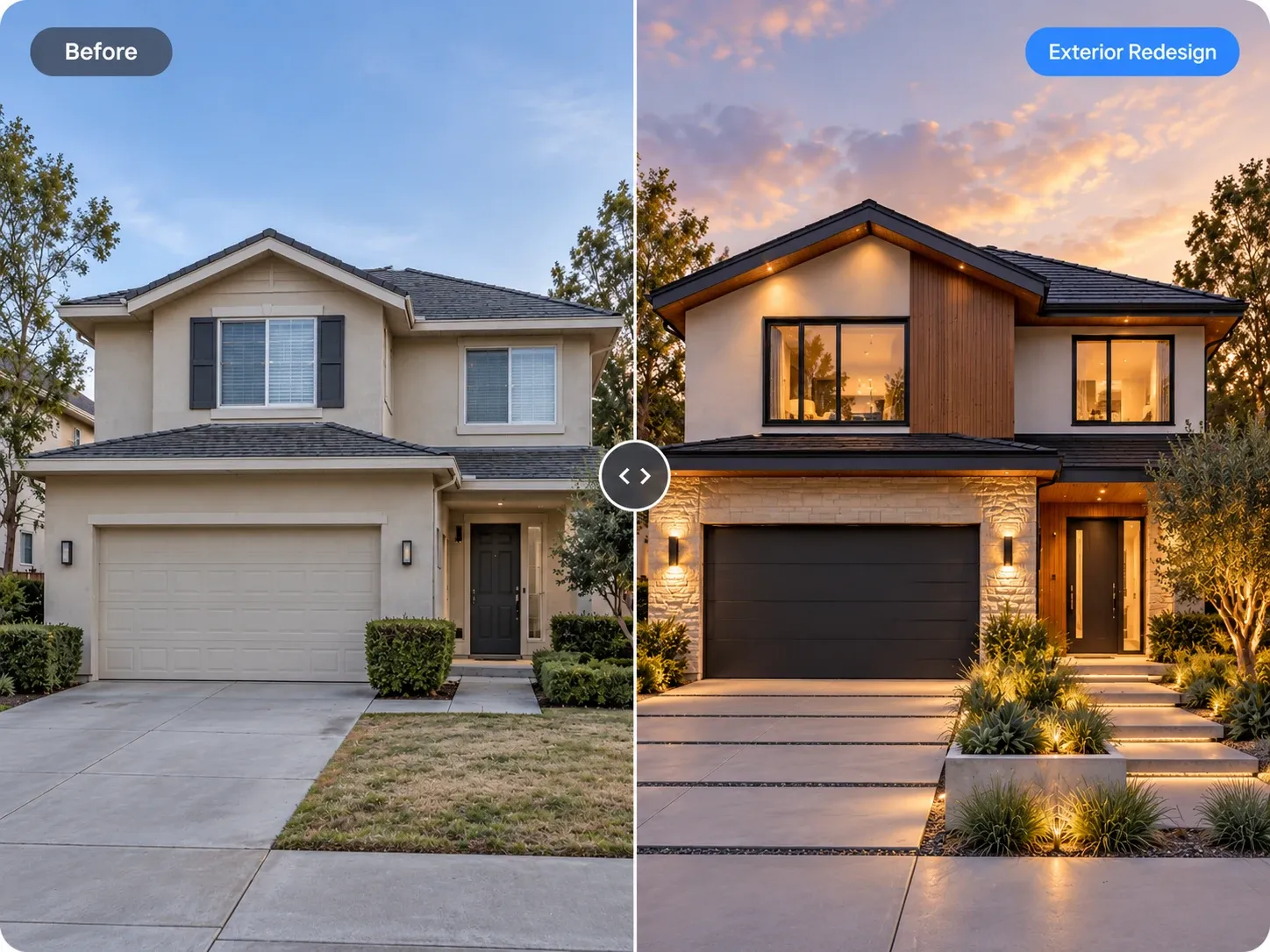
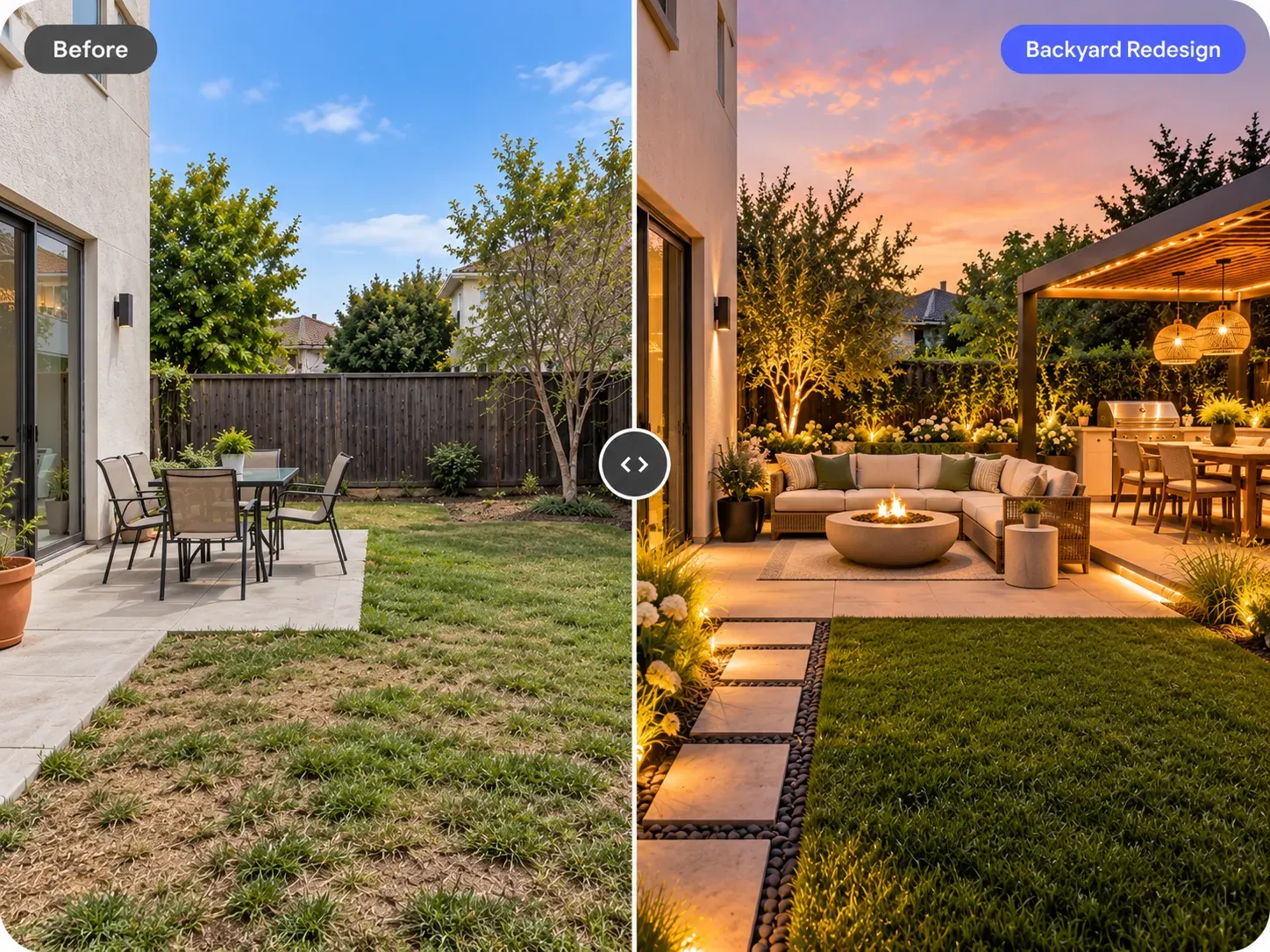
Before buying anything, it helps to see the plan. With AI garden design, you can upload a photo of your yard, pick a style and get a redesigned version in under a minute, with the house, fences and perspective kept in place. It will not give you measurements or a planting plan, but it is a cheap way to compare a gravel patio against more lawn before you spend real money.
Where to Spend and Where to Save on Budget Landscaping
The best budget landscaping rule is simple: spend on the bones, save on the decoration. Drainage, grading, a solid base under a patio and healthy trees are hard and expensive to fix later. Cushions, string lights, pots and annual flowers are easy to swap whenever you have more money or change your mind.
If a professional is involved, use them for the parts that carry risk, like regrading near the foundation or building a retaining wall, and do the planting, mulching and painting yourself. Browse backyard patio ideas to see which features make the biggest visual difference, then put most of your budget there.
- Spend: drainage fixes, a compacted patio base, one or two quality trees, durable edging
- Save: outdoor furniture, decorative pots, annual flowers, lighting you can add later
- Free or almost free: removing clutter, pruning overgrown shrubs, edging existing beds
Cheap Backyard Ideas That Still Look Finished
A yard looks expensive when it looks intentional. Clean lines, repeated materials and a limited plant palette do more than costly features. These cheap backyard ideas focus on structure, because structure is what makes a space read as designed rather than accidental. Get the layout and edges right first, and even inexpensive plants and furniture will look like they belong.
Gravel and mulch instead of pavers
Pea gravel or decomposed granite costs far less than pavers or poured concrete and is easy to install yourself. Lay landscape fabric, add a steel or plastic edge, and rake the gravel level. It works well for seating areas, paths and side yards. Wood chip mulch is even cheaper and suits informal paths through planting beds.
Crisp edges and one repeated material
A clean edge between lawn and bed makes an ordinary yard look cared for. Cut a sharp spade edge or install simple edging. Then repeat one material in two or three places, such as the same stone in a path, a border and a fire pit surround. Repetition ties the space together at almost no extra cost.
Low-Cost Plants That Fill Space
Plants are where small budgets stretch furthest if you are patient. Buy perennials in small pots instead of large ones, since they usually catch up within a season or two. Many perennials, like hostas, daylilies and ornamental grasses, can be divided every few years, so a handful of plants becomes dozens. Ask neighbors and local plant swaps for divisions.
Native plants suited to your region often need less water and fertilizer once established, which lowers ongoing costs. Group plants in odd-numbered drifts instead of dotting single plants around, and fill gaps with mulch while they grow. Fall is often a good time to plant in many climates, and garden centers frequently discount stock at the end of the season.
Phasing Backyard Landscaping on a Budget Over Several Seasons
You do not have to finish everything this year. Split the project into phases and complete each one properly. Phase one covers removal, drainage and any hardscape. Phase two is planting the main beds and trees. Phase three adds lighting, furniture and finishing touches. Each phase should leave the yard usable, not half dug up.
Safety and rules come first. Call 811 a few days before any digging so utility lines can be marked. Check with your city and HOA before building fences, decks or retaining walls, since many require permits above a certain height. Hire a licensed pro for electrical work, gas fire features and large walls.
Keep the end picture in view while you work. Saving your AI garden design render on your phone makes it easier to say no to impulse buys that do not fit the plan. If the front of the house needs attention too, our guide on how to modernize a house exterior covers curb appeal changes that pair well with a backyard refresh.
Preview Your Yard Before You Spend
Testing a design on a photo of your actual yard is one of the cheapest steps in the whole project. In Homes Design AI, choose a garden or yard as the room type, pick a style or try Surprise me, and add plain-language instructions like "gravel patio with a fire pit, keep the oak tree." You can then change only one area, such as the lawn or the fence color, and create variations to compare.
Your first design is free as a watermarked preview, so you can try your yard before committing to anything. Use the result as a visual brief for yourself or a landscaper. For the front of the house, front yard landscaping ideas show how to carry the same materials and plants around the property, and a second AI garden design pass on a front yard photo helps the two spaces feel connected.
Written by the Homes Design AI team. Next step: try AI Garden Design on a photo of your own space.