How to Modernize a House Exterior, Step by Step
7 min read
Learning how to modernize a house exterior is mostly about editing, not rebuilding. A few well-chosen changes to color, lighting, entry, trim and planting can make a dated facade look current. This guide covers what to change first, what each update usually involves, and how to preview the result on a photo of your own home before you spend money.
Start With an Honest Look at Your Facade
Before you pick paint or fixtures, stand across the street and take a straight-on photo of the house in soft daylight. Then list what makes it read as dated. Common culprits are busy trim colors, mixed materials that fight each other, small or mismatched light fixtures, a tired front door, overgrown shrubs that hide the foundation, and window grilles that chop the glass into small panes.
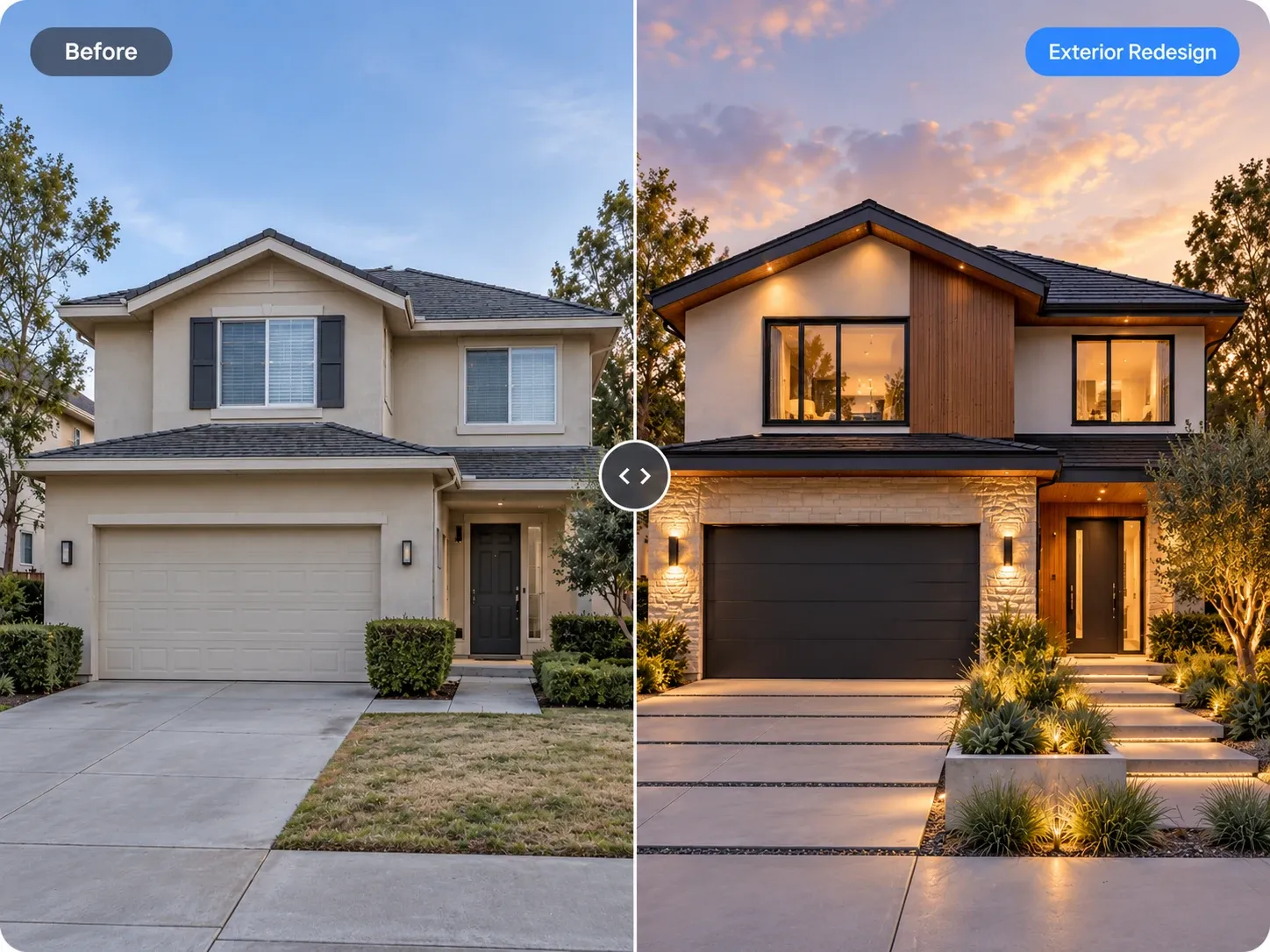
Next, separate what you can change from what you should keep. Rooflines, window placement and the overall shape of the house are expensive to alter. Color, hardware, lighting, doors, railings and planting are not. Most successful updates work with the existing shape and simplify everything around it. To compare directions before committing, upload that same photo to an AI home exterior design tool and look at several options side by side.
Write down two or three goals, for example cleaner lines, stronger contrast or a warmer, more welcoming entry. Clear goals keep you from buying random upgrades that never add up to a coherent look, and they make it much easier to explain what you want to a painter or contractor later.
Modern Home Facade Ideas That Start With Color
Paint is usually the fastest and least expensive way to update a house exterior. Modern palettes tend to use fewer colors with more contrast: a light body with dark windows and trim, a deep charcoal body with natural wood accents, or a soft white with black metal details. Limit the scheme to a body color, a trim or accent color, and one front door color.
Pay attention to the fixed elements. Your roof, brick, stone and pavers will stay, so pull undertones from them. A warm brown roof can clash with a cool blue-gray body, while a greige or warm white sits comfortably beside it. Test large samples on two sides of the house and check them in morning and evening light. For palettes that already work together, browse these exterior house colors.
Painting brick and siding
Painting brick is popular, but it is hard to undo and needs a breathable masonry paint so moisture can escape. Limewash or mineral paint is often a gentler option that ages softly. Vinyl siding can usually be painted with a vinyl-safe formula, but very dark colors may absorb enough heat to warp some panels, so check the manufacturer's guidance before choosing a deep shade.
Update the House Exterior Entry: Doors, Hardware and Lighting
The front entry is where people look first, so it deserves a larger share of the budget. A new door with simple flat panels, a full or partial glass insert, or one bold solid color can change the whole front of the house. Swap ornate hardware for a slim long pull or lever in matte black, brushed brass or stainless steel, and repeat that finish on the house numbers, mailbox and light fixtures.
Lighting matters more than most people expect. A common rule of thumb is that a wall light beside the door should be roughly one quarter to one third the height of the door, and going slightly larger usually looks better than going smaller. Choose simple cylinders, boxes or up-and-down wall washers, and use warm white bulbs around 2700K to 3000K so the house glows in the evening instead of looking clinical.
- Door: flat panels, a glass insert or a single saturated color
- Hardware: one finish repeated everywhere
- Wall lights: oversized, simple shapes with warm white bulbs
- House numbers: large, clean numerals that are easy to read from the street
Modernize an Old House Facade With Windows, Trim and Railings
Windows shape the character of a house, and replacing them is a big expense, so start with cheaper fixes. Removing snap-in grilles, painting frames a darker color and simplifying shutters can make older windows feel more current. Many modern facades skip shutters entirely, or use simple board-and-batten panels sized so they could actually cover the window.
If replacement is part of your plan, larger panes, black or bronze frames and a consistent window style across the front tend to look most modern. Window and door replacements may need a permit, and historic districts or homeowner associations can have rules about materials and profiles, so check with your local building or planning department before ordering anything.
Trim and railings are quick wins. Wide decorative trim can be painted to match the body for a cleaner look. Spindled porch railings can be swapped for horizontal metal, cable or simple square balusters, as long as you keep code-required heights and spacing. A licensed contractor can confirm which rules apply where you live.
Add Texture With Modern Materials
Modern exteriors often mix two or three materials with intention: for example a smooth painted body, a vertical board-and-batten section and a warm wood or wood-look accent around the entry. The key is restraint. Use the accent material on one meaningful area, such as the porch wall, a gable or the garage surround, rather than scattering it across the whole front.
Common accent options include fiber cement panels, thermally modified wood, composite cladding, metal panels and thin stone veneer. Each has different maintenance needs and costs, so ask your contractor how it performs in your climate. For a sense of how these materials combine, look through these modern house exterior ideas and note which combinations suit a roofline like yours.
Do not forget the garage door. On many homes it takes up a large share of the street view. A flush panel or full-view glass door in a color that matches the body or trim can modernize the entire front, often for less than you would expect compared with new siding.
Simplify the Landscaping and Hardscape
Plants frame the architecture, so overgrown foundation shrubs can make even a freshly painted facade look old. Modern landscaping uses fewer plant varieties in larger groups, clean bed edges and a clear, direct path to the door. Ornamental grasses, low evergreen shrubs and a single small specimen tree often look better than many mixed plantings competing for attention.
Hardscape helps too. Large-format concrete pavers, a widened front walk, steel edging and gravel bands all create crisp lines that echo modern architecture. Keep plants a little away from the house so siding can dry out and you have room for maintenance. If the front update is one part of a larger project, our guide on how to plan a home renovation explains how to sequence the bigger pieces.
Preview Your Plan and Set the Order of Work
Once you have a short list of changes, put them in a sensible order. Repairs come first: rot, drainage, gutters and roof issues. Then windows and doors, then siding and paint, then lighting, and landscaping last so new plants are not trampled during the work. Ask for written quotes and confirm whether any part of the project needs a permit.
Seeing the finished look first makes decisions easier. With Homes Design AI, you upload a photo of your house, pick a style such as modern or modern farmhouse, and get a redesigned image in under a minute while the roofline, windows and perspective stay in place. You can ask for specific changes in plain language, like a black front door or warm wood siding on the porch. Try a few versions with AI home exterior design before you call contractors. A rendering is a visual guide only, so you will still need measurements, quotes and any required drawings.
Written by the Homes Design AI team. Next step: try AI Exterior Design on a photo of your own space.