Virtual Staging vs Traditional Staging: How to Choose
6 min read
Virtual staging vs traditional staging is a common choice for anyone listing a home, especially an empty one. Both aim to help buyers picture living there, but they differ in cost, speed and what buyers see in person. This guide compares them honestly, covers disclosure, and explains when each one makes sense.
What Each Option Actually Involves
Before comparing prices, it helps to be clear about what you are buying in each case. Both options put furniture into the picture so buyers can understand the space, but one does it with real pieces in the actual rooms and the other does it only in the listing photos.
Traditional staging
A professional stager brings in rented furniture, rugs, art and accessories, arranges them in the home, and removes everything after the sale or at the end of the rental term. The home looks furnished in photos and during showings. It requires scheduling, delivery, access to the property and usually a minimum rental period.
Virtual staging
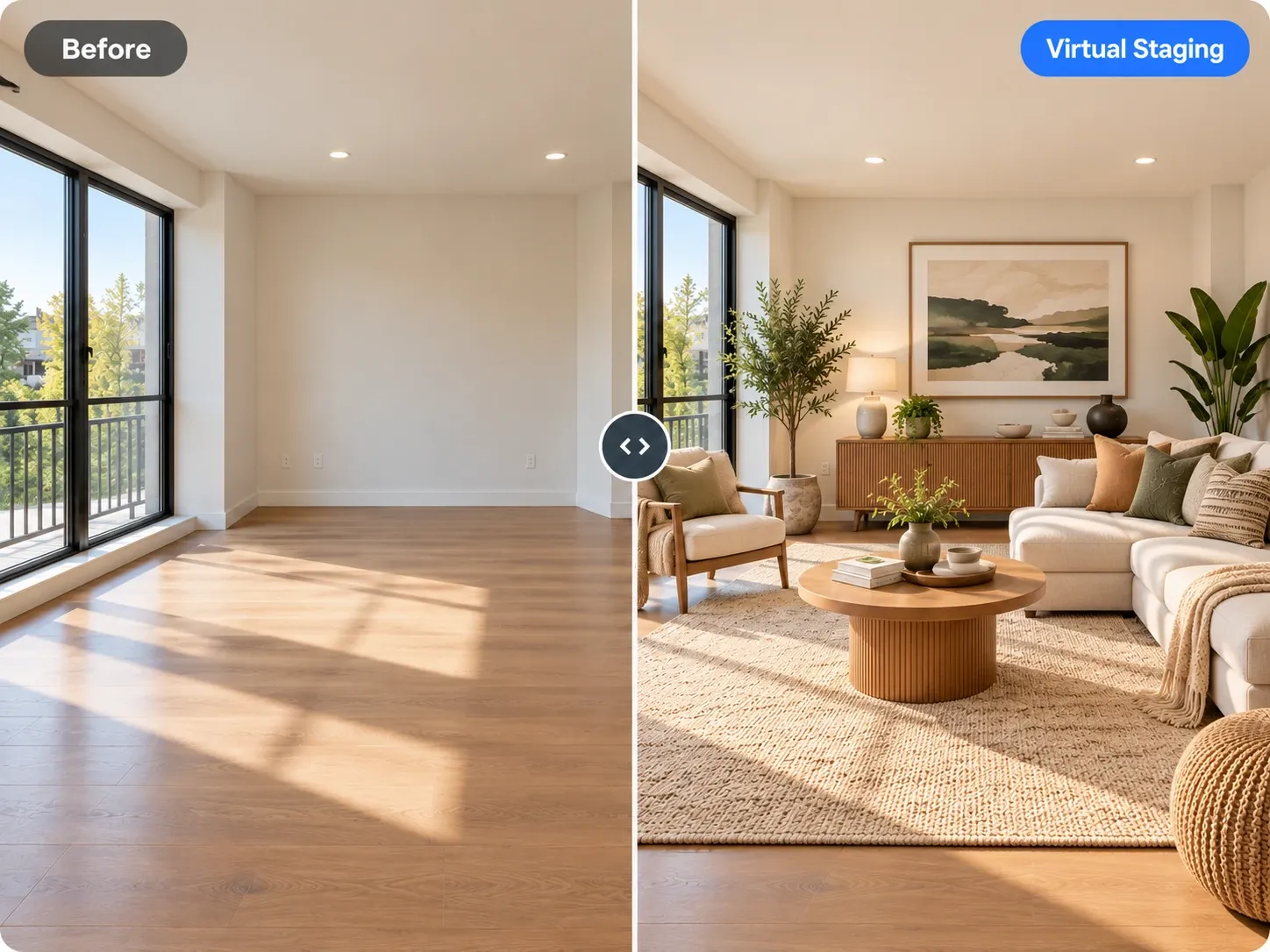
A designer or software adds furniture and decor digitally to photos of empty rooms. Nothing physical changes in the home. The edited images go into the listing, social posts and flyers. Modern tools, including virtual staging AI, can produce staged images from a single photo in minutes rather than days.
Virtual Staging Cost Compared With Traditional Staging
Costs vary widely by market, home size and provider, so treat any figure as a rough guide and get local quotes. In general, traditional staging is the bigger investment. It typically combines a design or consultation fee with a monthly furniture rental, and a whole-house job can run into the thousands of dollars, especially if the listing stays on the market for several months.
Virtual staging is usually priced per photo or through a subscription. Human-edited virtual staging is often charged per image, while AI tools tend to cost much less per image because generation is automated. Homes Design AI, for example, offers plans from $9 per month, and the Pro plan at $19 per month adds 4K HD output and commercial use, which matters for listing photos.
The trade-off is simple. Virtual staging only exists in photos, while traditional staging also shapes what buyers feel when they walk through the door. That difference, more than price alone, should drive your decision. Think about how many showings you expect and whether buyers will mostly judge the home from photos or in person.
Pros and Cons of Each Approach
Neither option is better in every case. The right choice depends on your price point, your timeline, the condition of the rooms and how buyers in your area tend to shop. Many listings get most of their first impressions online, but in-person showings still close the deal, so weigh both moments.
- Traditional: real and tangible, higher cost, slower setup
- Virtual: fast, affordable, flexible styles, photos only
- Both: depend on good photography to work
Where traditional staging wins
Buyers experience the furnished space in person, which helps them understand scale and flow. It can make awkward rooms feel usable and photographs naturally, with real light falling on real objects. For higher-priced homes or listings with many in-person showings, those benefits can justify the cost and the extra coordination.
Where virtual staging wins
It is faster and far cheaper, it does not require hauling furniture in and out, and you can show the same room in several styles for different buyers. It also works when the property is far away or hard to access. The main drawback is the gap between the photos and the empty rooms buyers walk into.
Is Virtual Staging Worth It?
For vacant homes, virtual staging is often worth it because empty rooms are hard to read in photos. Without furniture, buyers struggle to judge whether a bedroom fits a queen bed or where a dining table would go. Adding realistic furniture to listing photos gives them a reference point at a fraction of the cost of physical staging.
It is less useful when the home is already nicely furnished, when the rooms are in poor condition, or when furniture would hide problems. Staging should help buyers understand the space, not disguise it. Many agents use a mix: they physically stage the main living area and virtually stage secondary bedrooms, a bonus room or a basement.
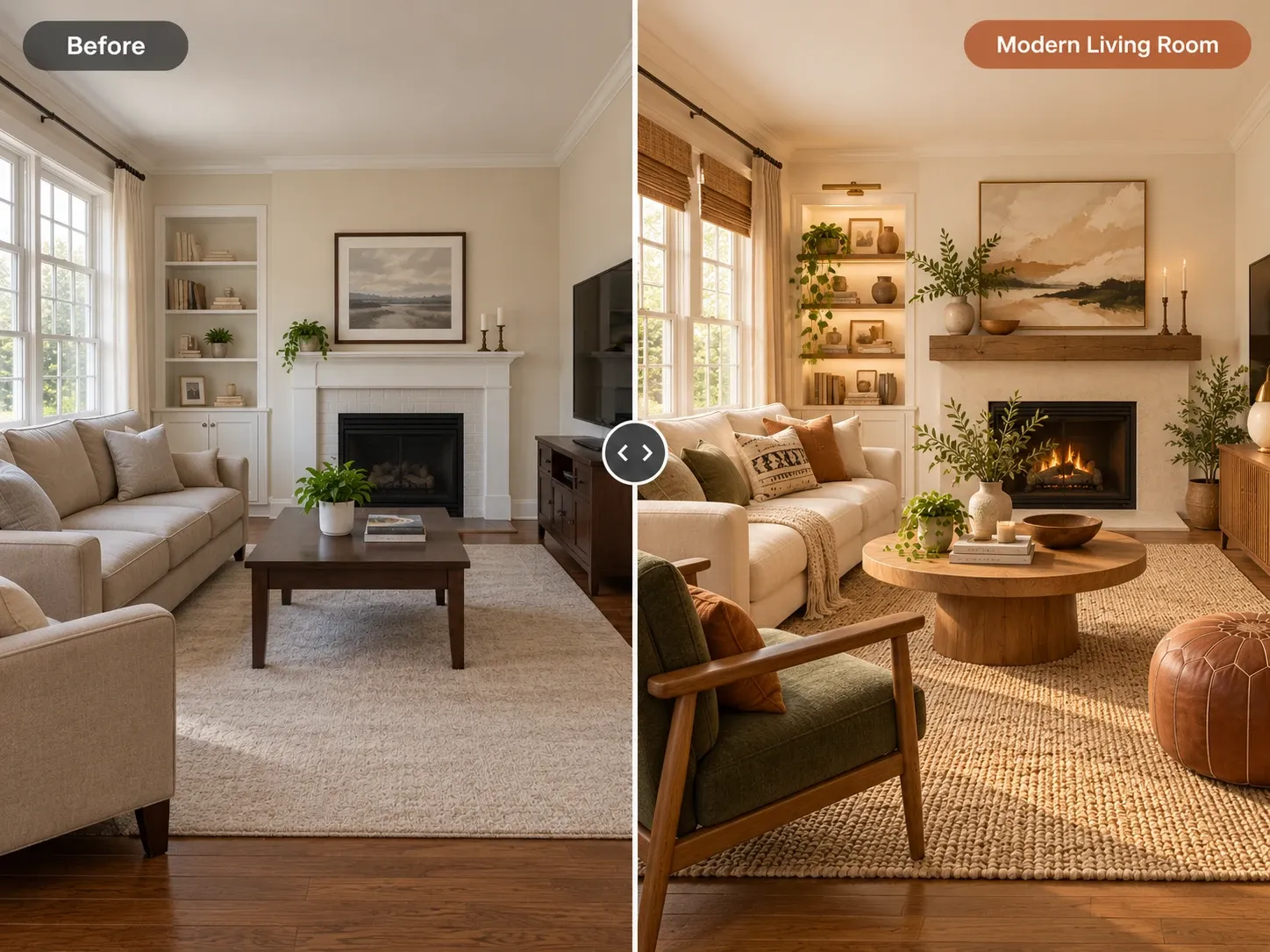
Style matters too. Calm, broadly appealing looks, such as Scandinavian interior design or a light modern living room, tend to suit more buyers than bold, niche themes. Keep the same style across every staged room so the listing feels cohesive from one photo to the next, and choose furniture sized realistically for each room.
Disclosure: Label Virtually Staged Photos
Honesty matters with virtual staging. Buyers should never feel misled when they arrive at a showing. The common best practice is to clearly label each virtually staged photo, for example with a caption or small watermark reading Virtually staged, and to include the unstaged photo of the same room wherever the listing platform allows it.
Rules differ by MLS, brokerage and location, so check the requirements that apply to you before publishing. In general, virtual staging should add furniture and decor only. Do not digitally remove permanent defects, change the view from a window, add fixtures that are not there, or misrepresent the condition of the property. When in doubt, ask your broker.
- Label every staged image clearly
- Show the original empty photo alongside it when allowed
- Change furniture and decor, not structure or condition
- Follow your MLS, brokerage and local rules
How to Get Good Virtual Staging Results
Virtual staging is only as good as the photo underneath. Shoot each room from a corner at chest height with a level camera, in bright, even daylight. Avoid ultra-wide lens distortion, which makes added furniture look out of scale. Our guide on how to photograph a room for AI design covers angles, lighting and prep in detail.
With Homes Design AI, you upload the empty room photo, choose the room type and a style, and get a furnished version in under a minute, with walls, windows and perspective preserved. You can request specifics, like a smaller sofa or a lighter rug, and create variations until it looks right. Try virtual staging AI on one room first; your first design is free as a watermarked preview.
Which Should You Choose?
Choose traditional staging if the home is high-value, likely to have many in-person showings, and your budget allows it, or if the rooms are genuinely hard to understand without physical furniture. Choose virtual staging if you need speed, have a tighter budget, are marketing online first, or want to show buyers several style options.
Many sellers combine both, and landlords and renovators often use virtual staging to market a property between tenants or before work is finished. Whatever you pick, label digital edits clearly, keep furniture realistically sized, and make sure the photos stay true to the home's actual condition. Buyers who trust your photos arrive at showings ready to buy.
Written by the Homes Design AI team. Next step: try Virtual Staging AI on a photo of your own space.